

He has left all of us with an extraordinary and unfailingly generous musical inheritance.
-Martie Perry
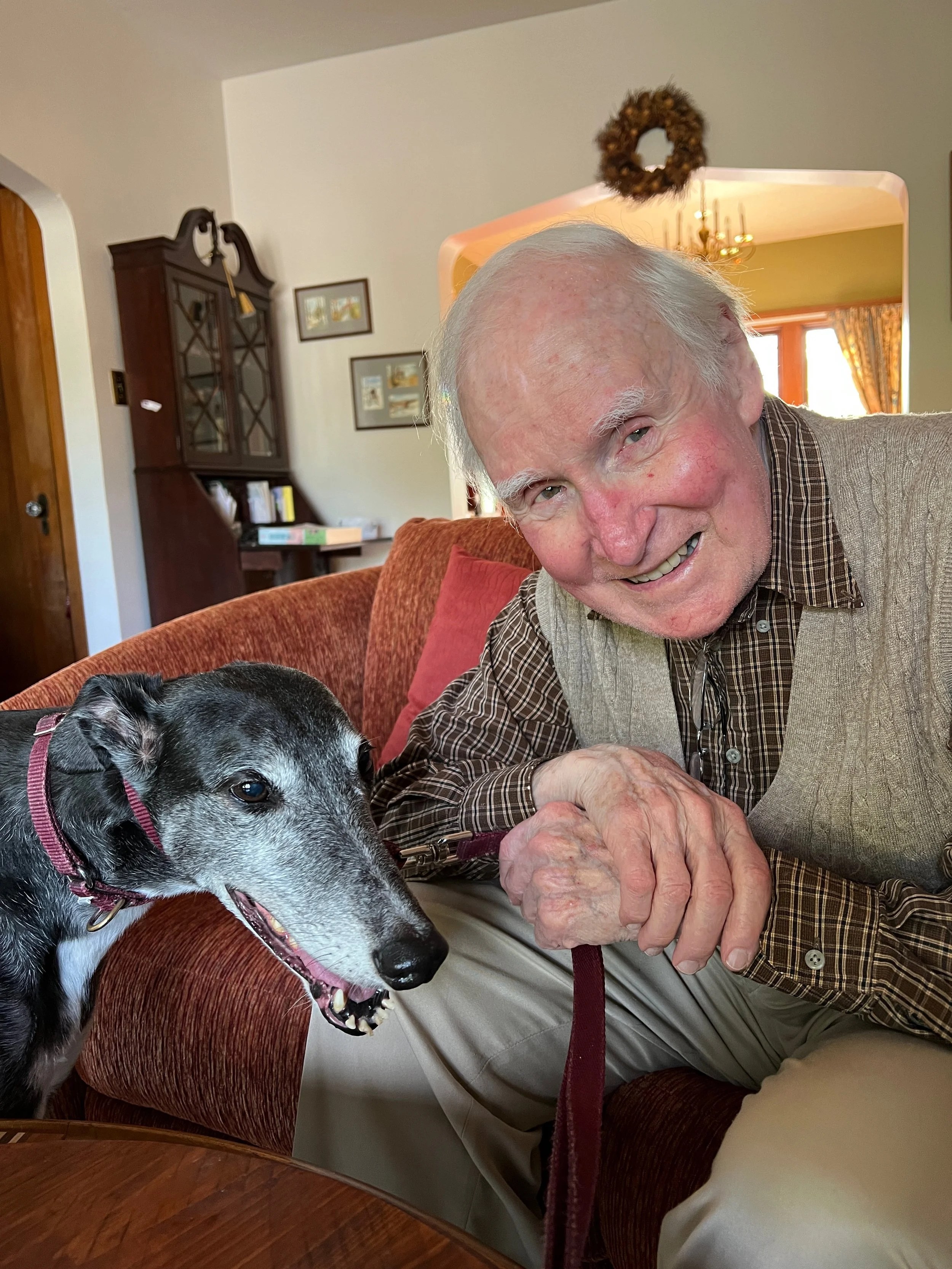
Remembering Stanley Ritchie (1935-2026)
Stanley Ritchie will forever be regarded as a beloved teacher, director, mentor, and dear friend of the early music community in Bloomington and beyond. As a founder of the Bloomington Early Music concert series in 1992 and during his time as artistic director of the Bloomington Early Music Festival, Stanley brought the most incredible blend of artistry and humor to performances—as well as the highest standards of dynamics, phrasing, and color. From smaller chamber programs to larger orchestral works, Stanley approached every piece with reverence, curiosity, and a fierce adherence to making the notes on the page come to life.
In the three decades since the creation of BLEM, Stanley’s energy has been felt throughout venues across Bloomington, from the Buskirk-Chumley Theater to the Auer Hall stage and from the FAR Center to downtown church sanctuaries. He brought his Bloomington audiences—and fellow musicians on stage—moments of delight and wonder which will never be forgotten. It would be an understatement to say that Stanley changed the lives of his students, colleagues, and anyone who had the pleasure and honor of knowing him. Stanley’s supportive presence continued to influence BLEM’s festival and the work we do up to the present day. His enthusiasm for our decision five years ago to program festivals with strong humanist themes, as a means to educate audiences about underrepresented groups in historical musical culture, for example, gave us the extra boost and courage to take this new and untrod path. And it is through his legacy that the youth program, Bloomington Early Music Immersion and the BEMI Players Stanley Ritchie Youth Performance came to life and continues to thrive, bringing the joy of early music to the younger generation.
-Joanna Blendulf, former Ritchie student and colleague
One of the great gifts of studying with Stanley in particular was the opportunity to play under his direction in the Bloomington Early Music Festival operas. Those experiences gave me something that is difficult to replicate: real-world experience playing Baroque opera in an orchestra, but with the extraordinary luxury the festival afforded us of having ample rehearsal time to explore the music in depth. I learned so much from Stanley in those rehearsals-not only about style, rhetoric, pacing, gesture, and the way the orchestra participates in telling the story, but also about the tremendous energy, discipline, and work ethic it takes to bring a production like that to life. Stanley always brought more than 100 percent of himself to the process, and watching that commitment at close range taught me lessons about the work of being an artist that have stayed with me with just as much assuredness as the musical ones. My entire experience of studying with Stanley and being a part of the Early Music Institute (now the Historical Performance Institute) and the Bloomington Early Music Festival felt electrifying on so many levels, and I know that his incredible dedication to his work with us as his students was a part of this sensation. The learning was powerful and deep; it was unique in all of the world and truly unsurpassable as an experience for a young artist.
I am about to direct the North Carolina Baroque Orchestra in several performances of Purcell’s King Arthur presented in a concert version. Throughout my preparation, my memories of performing King Arthur with Stanley during the Bloomington Early Music Festival have been staggeringly present. There is something indescribable about preparing to lead this music so soon after Stanley's death. It has been particularly poignant, filled with grief but also overflowing with gratitude. This is music I first came to know and adore in detail from inside the orchestra with him leading it. I find myself remembering those rehearsals, the things he drew our attention to, the standards he expected of all of us, what he gave to the creation of the production and the extraordinary energy he brought to the music himself. So much of what I absorbed during that experience feels alive to me again as I prepare to lead this music now. It is a powerful reminder of how a great teacher continues to teach us long after the lesson, rehearsal, or performance itself has ended. He has left all of us with an extraordinary and unfailingly generous musical inheritance. I feel like studying with Stanley was absolutely one of the greatest blessings of my life, not only as a musician, but as a human being.
-Martie Perry, former Ritchie student
More coming soon!